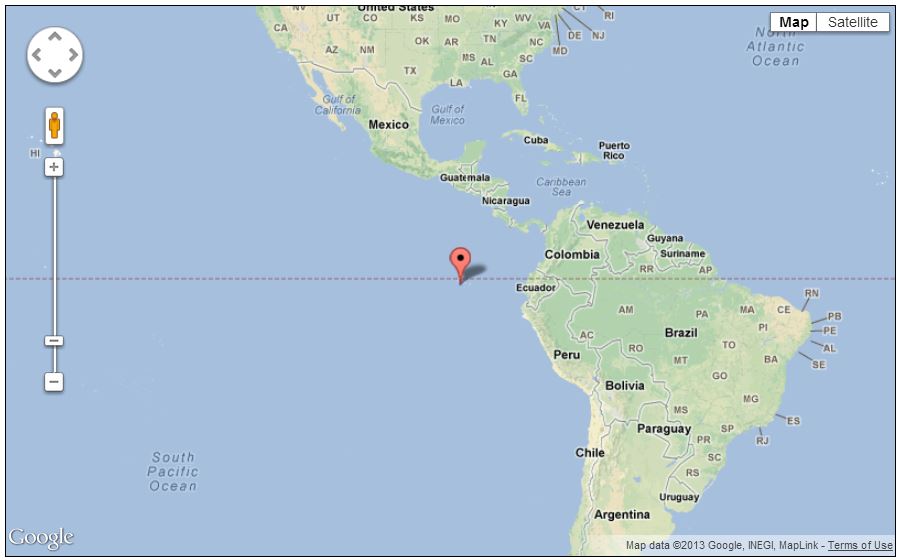
H70ORO(Nicaragua) on 20m CW-3!!!
|  |
|
conmemorative call op yn9su bengt halldén
qth / NICARAGUA
QTH NICARAGUA
Nicaragua
[+] Mailing label
|
Lookups: 15959
|
| Email: Use mouse to view.. QSL: TI4SU ,BOX 234, CIUDAD QUESADA, 4400 COSTA RICA |
20130517 1211UTC 14016.2kHz H70ORO
Date : 17/May/2013 1211UTC
Freq : 14016.2kHz CW
Rig : SDR(PI4THT)
ANT : Mini-Whip(PAØRDT)
PC recording
Oh!!! Nice sig JA.. Tnx fer 2nd QSO 73's : )
| Lookups | 15959 (21957) |
| QRZ Admin | YN4SU |
| Last Update | 2013-05-06 03:57:15 |
| Geo Source | From DXCC |
| Bearing | 46.9° NE (from JJ5IZX) |
| Distance | 8321.1 mi (13391.6 km) |
| Long Path | 16535.7 mi (26611.6 km) |
| Sunrise | 11:21:30 UTC |
| Sunset | 00:01:28 UTC |
| ITU Zone | 11 |
| CQ Zone | 7 |
| QSL Info | TI4SU ,BOX 234, CIUDAD QUESADA, 4400 COSTA RICA |
| QSL by Mail? | Yes (e.g. Will this ham QSL by Postal Mail?) |
| QSL by eQSL? | No (e.g. Will this ham QSL with eQSL?) |
| Uses LOTW? | No (e.g. Does this ham use ARRL's LOTW ?) |
| Apply for a new Vanity callsign... |
|
CONMEMORATING ONE CENTURY OF RUBEN DARIOS NOVEL
El oro de Mallorca
Rubén Darío
Valldemosa, noviembre de 1913
I
El barco blanco de la Compañía Isleña Marítima se hallaba anclado cerca del muelle marsellés. El sol del mediodía estaba esquivo en la fresca mañana. Acompañado de un amigo, Benjamín Itaspes fue a bordo, se posesionó de su camarote, entregó su equipaje. Como ya se iba a partir, se despidió del amigo y se puso a pasear sobre cubierta. Él era el único pasajero de primera. Por la proa, escasa gente, toda mallorquina y catalana, posiblemente del pequeño comercio, conversaban en su áspera lengua. El vapor era limpio y bien tenido; con todo, había un vago olor muy madre-patria. La cocina estaba sobre el entrepuente y se veía a un cocinero sórdido manejar perniles y pescados. A un lado suyo, en una especie de jaula, había cecinas; sobreasadas, cebollas, pimientos rojos y salchichones. De cuando en cuando salía un fogonero, todo negro, de una puerta lateral. Cogía un botijo que había al alcance de su mano, y bebía a chorro. Luego volvía a descender a su carbonera.
This is how the novel " el oro de mallorca " starts.
/////////////////////////////////////////////////////////////////////////////////////////
Rubén Dario wrote this novel in the year
PART OF THE MARKET IN CIUDAD DARIO.
HERE SHE IS AGAIN - POST OFFICE CLERK IN CIUDAD QUESADA COSTA RICA. HERE IN FULL KING IZE.
QSL INFO . VIA TI4SU . BOX 234 . CIUDAD QUESADA 4400
COSTA RICA . PLEASE INCLUDE $2/ OR 2 IRC / FOR RETURN POSTAGE . THANK YOU.
Darío, Rubén
Biography 
Rubén Darío was born on January 18, 1867 in Metapa, Nicaragua (later renamed Ciudad Dario). At birth, he was named Félix Rubén García Sarmiento and later took the old family name, Darío. His parents divorced and he was adopted and raised by his godfather Colonel Félix Ramírez. Dubbed El Niño Poeta (the poet child), Darío began reading at the age of 3 and at 12 he was already publishing poems.He called his first three poems “La Fe,” “Una Lagrima,” and “El Desengano.” In 1882 in an attempt to secure a scholarship to study in Europe, Darío read his poem, “El Libro” to conservative Nicaraguan authorities including President Joaquín Zavala.He was denied the scholarship because his poems were considered too liberal and officials feared a European education would further encourage his anti-religious sentiments. Instead, Darío traveled to El Salvador where he met the well-respected poet, Francisco Gavidia. Gavidia introduced Darío to the rhythmic structure of French poetry, which later became the cornerstone of Darío’s revolutionary verses.
At the age of 19, Darío moved to Chile and dabbled in journalism. That year he also wrote his first novel,
Emelina, which was unsuccessful. Nevertheless, his poetry received praise in competitions. In Chile, Darío was confronted with prejudice and racism due to the dark complexion of his skin, compared to that of the European-influenced Chileans. Despite his disillusionment and despondency, Darío continued to be prolific in his writing and published some of his more popular works such as
Azul,
Otoñales, and
Primeras Notas.
In 1890 at the age of 24, Darío married Rafaela Contreras and a year later while living in Costa Rica his son, Rubén Darío Contreras was born.After fleeing from a military coup, the couple moved to Guatemala where he was recruited in 1892 to represent Nicaragua in festivity celebrating the four-century discovery of the New World.The following year his wife died and he began to drowned his sorrows in alcohol. Soon after, Darío involuntarily remarried his ex-girlfriend, Rosario Murillo, after her brotherforced him at gunpoint.Rosario’sbrother found the two lovers in bed and arranged a marriage in order to restore his sister’s honor and reputation.Darío, who had no recollection of the previous night, awoke the next morning with a hangover and a new wife.Although never divorced from Rosario, Darío fell in love with and lived with his mistress, Francisca Sánchez del Pozo.In addition, Darío did not limit his sexual relationships to his wife and mistress and fathered several children, some who died and others he never met. Throughout his life, Darío indulgance in alcohol and women made him notorious for his immoderate lifestyle.
In 1893, Darío was appointed consulate in Columbia by President Miguel Antonio Caro and traveled to Panama and Argentina.In 1896 Darío published
Los Raros, poems about other writers such as Poe, Lautréamont, and Ibsen who he likened himself to and who he considered his “twin souls.”Later that same year he published
Prosas Profanas, a book of poems which documented his trademark rhythmic style and modernist approach.At 31, Darío worked for
La Nación, an Argentinean newspaper, and reported his impression about the Spanish during its war with the United States.While still working as a poet and journalist, he was named Ambassador of Nicaragua in Paris in 1903. Darío wrote several poems that exalted his Latino origins and culture such as “Cantos de Vida y Esperanza” and “Viaje a Nicaragua e Intermezzo Tropical.”He published his autobiography in 1912.
In 1914 Darío was honored in New York with a silver medal from the Hispanic Society of America.Later that year, he fell ill to pneumonia and recovered only to find himself financially bankrupt.Colombian poet and friend Juan Arana had to beg in the streets of New York to support Darío. He also managed to collect money from friends in Buenos Aries and from the Nicaraguan government. The following year Darío returned to Nicaragua and died there in 1916 at the age of 49 (“Cronologia”).
Major Works
As a poet, journalist, and novelist, Darío remained a prolific writer through his life. He published his works between the years of 1879 and 1914. Darío gained recognition throughout Latin American and Spain with the 1905 publication of
Azul, a full-length collection of his work.
Azulintroduced Darío as the spokesman of a new Latin American modernism.The collection incited a literary revolution because Darío replaced the complex Spanish verse with a simple, direct structure (
Rubén Darío 1867-1916). His most celebrated book,
Cantos de Vida y Esperanza,was published in Spain in 1905.Although the book touches upon modern themes such as exoticism, it focuses primarily on Darío himself and his search for higher consciousness. It serves as a retrospective account of the author and his Hispanic roots (
Rubén Darío).Darío is also well recognized for his collection of poems,
Prosas Profanas, which cemented his talent as an engineer of words and language. Darío’s work varied in inspiration and form.However, he always linked his work to a deep-seated pride in his Hispanic origins. In addition, Darío often wrote about his various travels and experiences. Darío was primarily influenced by other poets such as Díaz Mirón and Julián del Casal (
Rubén Darío).
Darío’s Poetry
The social condition throughout the 19th century gave rise to an intellectual vacuum that sought realization through art, science, and politics.As a result, the modernist movement between 1880 and 1910 developed in an effort to quench the thirst for understanding and enlightenment.Modernism is a combination of romanticism, parnassianism, and symbolism (
Modernism in Poetry).Darío is a modernist artist who describes his poetry as “the Hispanic form of the universal crisis in literature and spirit that began around 1885″(
Ruben Dario y el Modernismo).
Most countries in Latin America obtained political independence from Spain before 1825. However, independence brought political corruption and violence, which furthered a social eagerness for freedom.During the mid-19th century, Latin American writers modeled free thinking French and Spanish romantics to express the disillusioned Hispano condition. Darío became the voice for his people by using free verse to express values such as individualism and freedom (
Modernism in Poetry).
Darío’s poetry, unlike his predecessors’, was able to fuse traditional poetic style with new innovations to create a uniquely Daríano verse(Pena, “Darío y Whitman”).Darío is considered the father of the Latin American modernist movement because of his innovative rhythmic and metric structure and his sensual imagery and symbolism (
Rubén Darío 1867-1916).He is attributed with adding a musical, rhythmic quality and an unparalleled sensitivity and cognizance to his verse.Poet Jorge Luis Borges said, “Darío’s place is central. It is not a live influence but a reference point: a point of arrival and a point of departure, a limit that has to be reached or surpassed” (
Rubén Darío y la Critica).
Fellow poet Enrique Anderson Imbert said, “With incomparable elegance, he brought to poetry a joy of living and a fear of dying” (
Rubén Darío y la Critica). His poetry and prose left an indelible dent in Hispano literature. Darío created a new poetic world and revolutionized traditional patterns and rhythms. In his poem “El Canto Errante,” Darío summarizes his poetic ideals and philosophy, “Poetry will exist as long as there is a problem of life and death. The gift of art is a superior gift that allows you to enter into the unknown of the before and into the ignored of the after, in the world of dreams and meditation.There are no schools; there are poets.The true artist understands all the ways and finds beauty in all forms. All the glory and eternity are in our conscience” (“Cronologia”).
 Galapagos Islands