Saturday, September 20, 2025

20250920 PSK report (for FT-8) -2-


 20250920 PSK report (for FT-8) -2-


        Pskreporter.info for Ham radio : )


Look!! JA  JH5MXB on PSK report on 20m band(9/19)


                   A     Oh My God!!  still strong signal in the world. 

                   B     Today is very nice condition... but this level?... So great!! 

                   C     This is a joke... He had became " Voice Of America " ... : )


            By the way ....  My system case 2 ...

                            Rig    ICOM IC-7200 25w only

                            Ant    Long wire (abt L=20m )              


            JJ5IZX = All band + FT-8 (about 10 hour later check

                          .*.   Check time was late about 10 hour . so different gray zone.

                        OK more than yesterday cover Area...but Almosu 15m + 30m band.

                        Why?? no good ..20m & 40m 

            JJ5IZX = 80m band + FT-8 


            JJ5IZX = 40m band + FT-8


            JJ5IZX = 30m band + FT-8


            JJ5IZX = 20m band + FT-8


            JJ5IZX = 17m band + FT-8


            JJ5IZX = 15m band + FT-8


            JJ5IZX = 12m band + FT-8 


            JJ5IZX = 10m band + FT-8


            伝搬の結果は 15m > 17m > 30m > 10m > 12m > 40m >>>> 20m 80m

            ※ 20mについてはあまりQRVしなかったのが本当のところ。

            ※ 15m bandが最高に良かったが、当然ながら競合局が多くQSOは少ない。

            ※ 昨夜は寝不足の局が多かったのでは?(笑)

            ※ 実はしれっと南極にも当局のSignalは届いていた(30m 17m 15m 画像左下)

            ※ 8J1RL & RI1ANPはMulti mode でComfirmだがDP0GVNはNo yet


            DP0GVN de JJ5IZX,

            Please QRV on FT-8 ...

            Ham radio stations around the world will be calling you.

                   
                Amateurfunkstationen auf der ganzen Welt werden Sie anrufen.

            Very best 73`s  : )


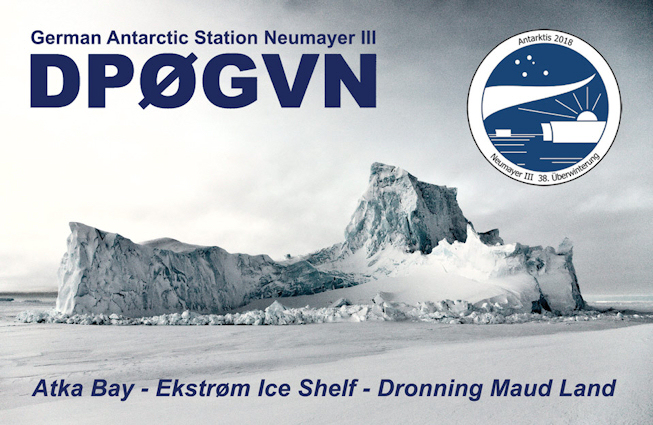
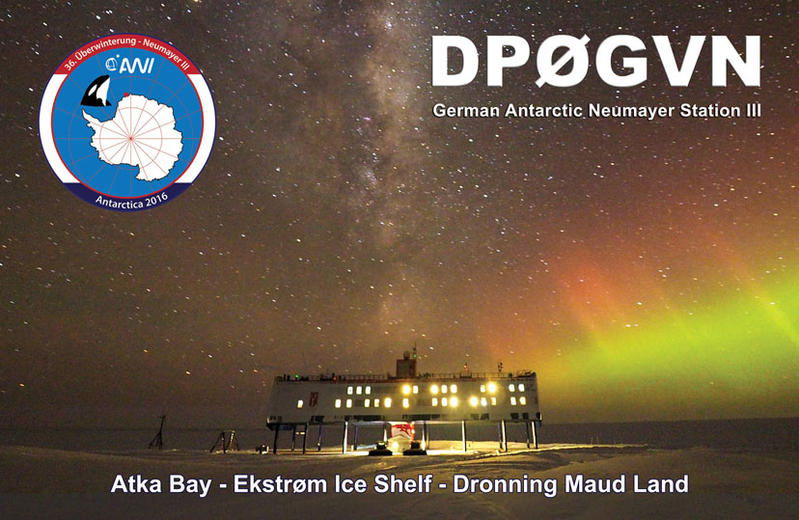
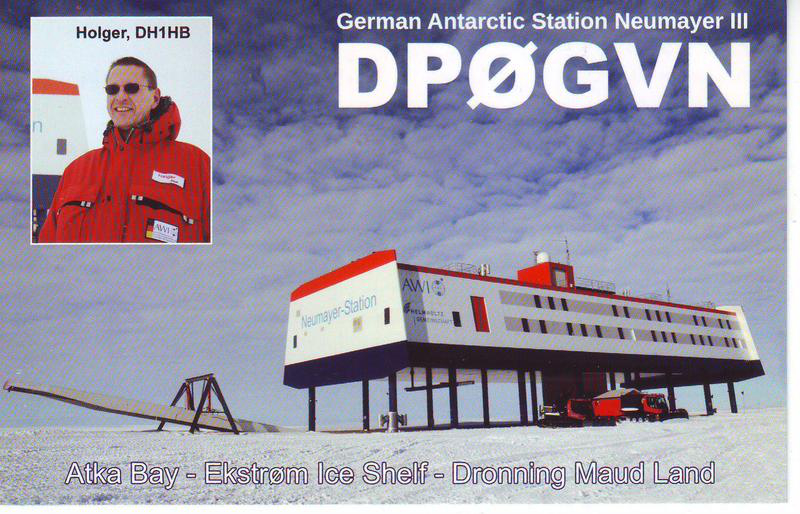
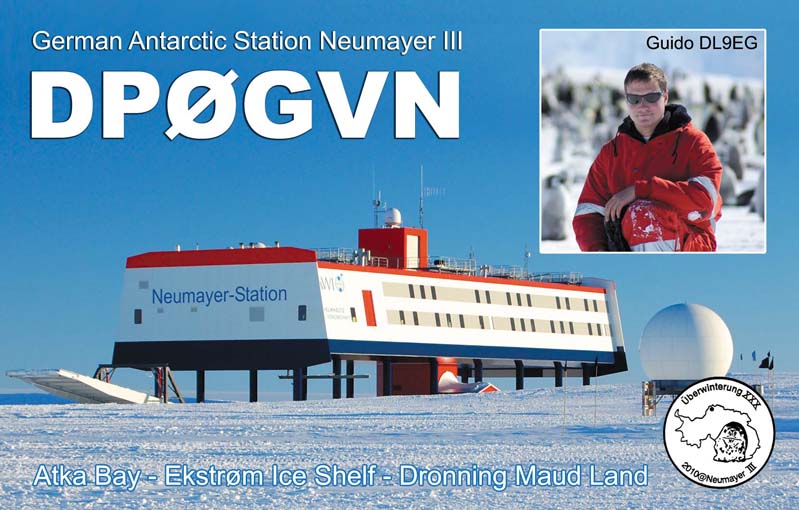
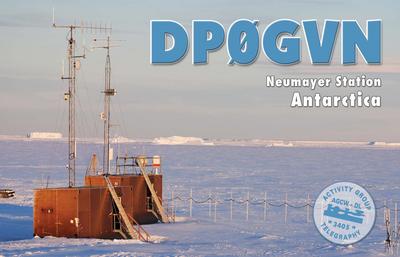
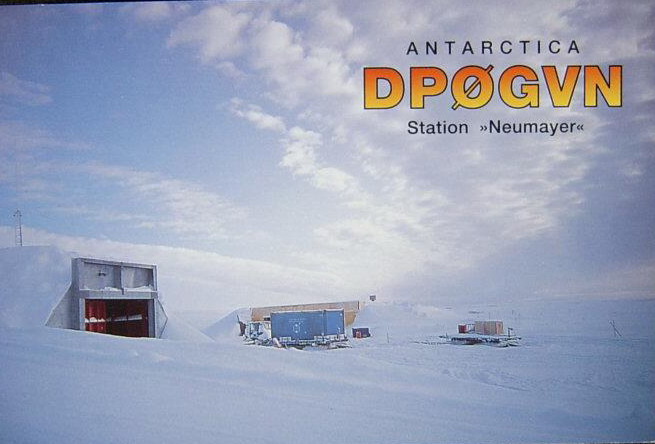
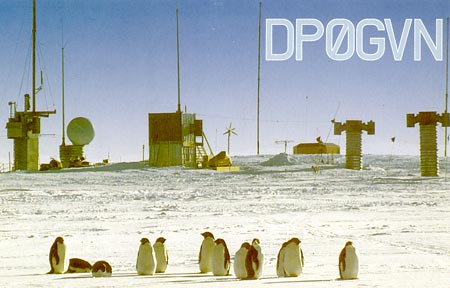
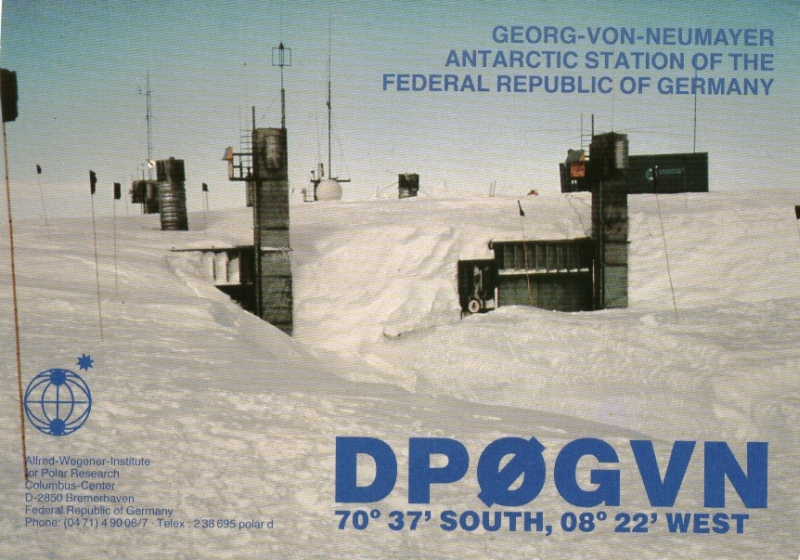
DP0GVN Antarctica flag Antarctica

Neumayer Station III
Ekstroem Ice Shelf
Atka Bay, Dronning Maud Land
Antarctica

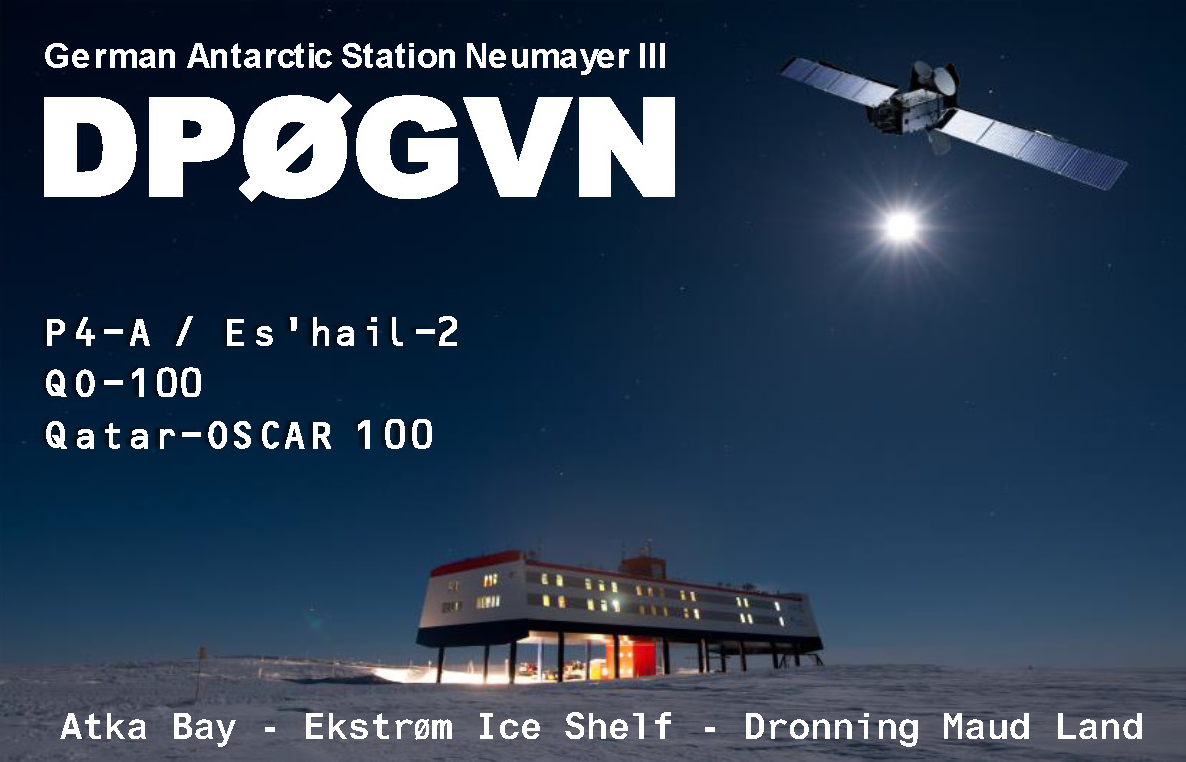
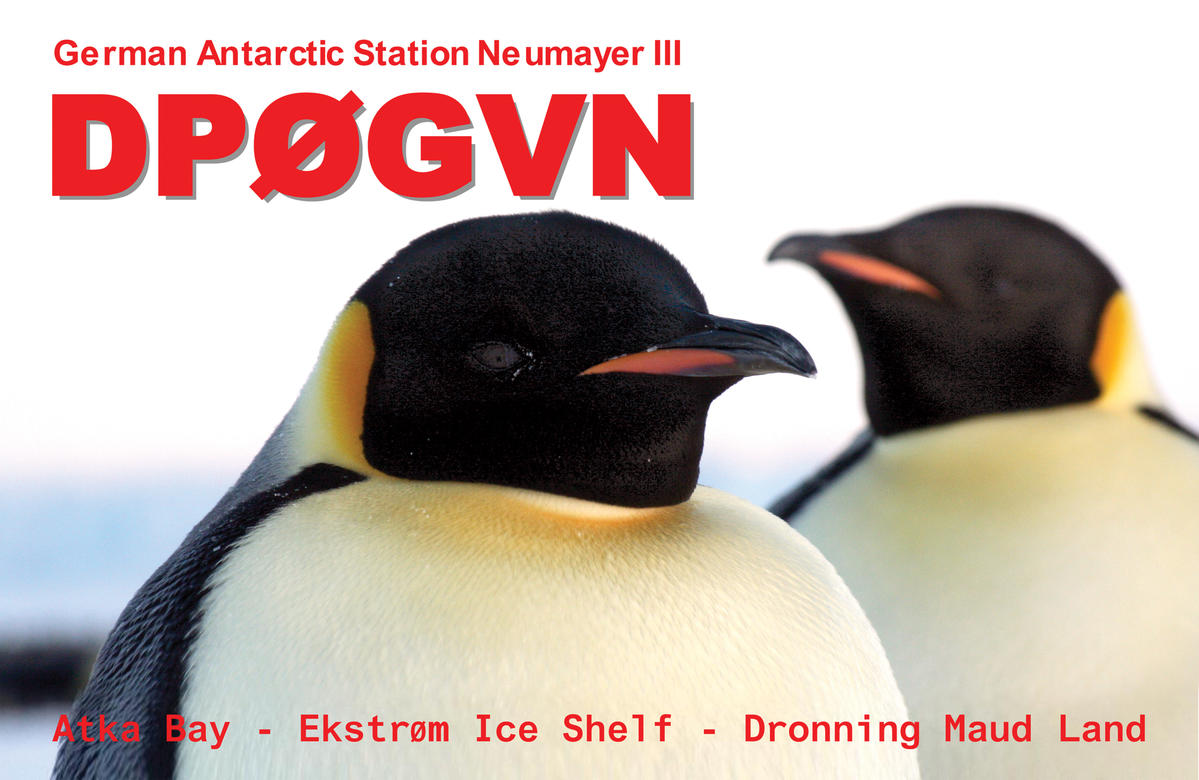
QSL: DL4BBH

Email: Use mouse to view..

Ham Member Lookups: 568132 

 
    Primary Image for DP0GVN


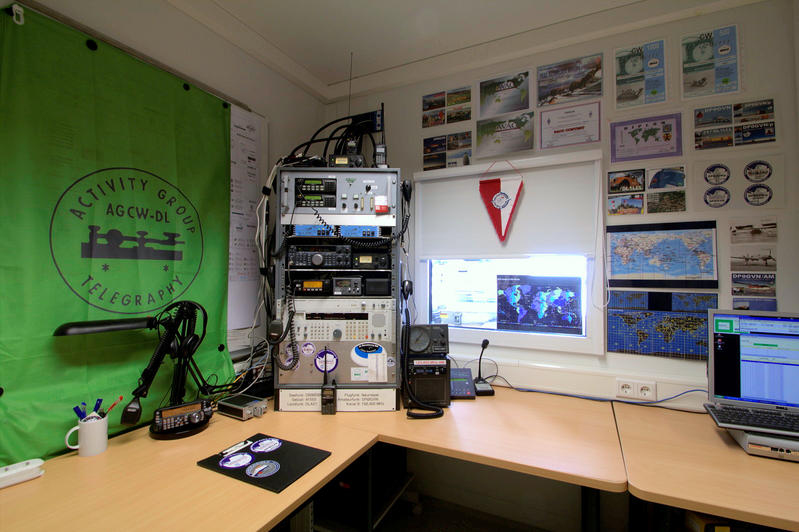
    DPØGVN is a club station located at the German Antarctic Research Station "Neumayer III" in Dronning Maud Land, Antarctica. Find more on this outpost of global research at https://www.awi.de/en/expedition/stations/neumayer-station-iii.html. The call sign is regularly being activated by station personnel as well as visitors. QSL cards (both for HF and QO-100 satellite contacts) are available via DL4BBH, direct or via the DARC QSL bureau. Logs are also being uploaded to LotW irregularly.

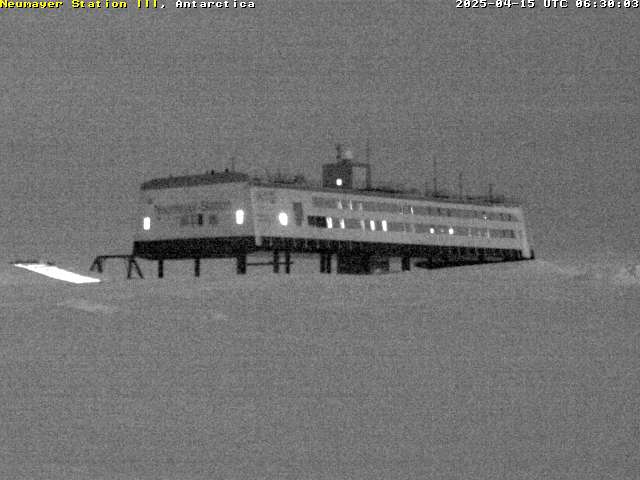
    Current Webcam Picture:

    Neumayer WebcamDP0GVN School Contacts

    WSPR Beacon

    • Station Info

    The setup consists of a receiver and a transmitter which independently of each other operate in the WSPR segments of the amateur radio HF bands.

    • Receiver

    The receiver is located at the "SpuSo" which is the station's air chemistry laboratory. SpuSo's main purpose is to collect continuous, year-round and long-term data records for important gaseous and particulate trace components of the troposphere. This observatory is located about 1.5 km south of the main station where it finds an outstandingly clean air environment.

    This is a perfect place for a receiver setup because the RF environment, too, is amazingly  QRM-free with a noise floor well 20, 30 or even more dB below of what we are used to in urban areas.

    The receiver is a SDR built around three Red Pitaya (StemLAB 125-14 with 50 dB preamplifier). They permanently observe all eleven WSPR band segments between 160m and 6m and upload the spots to wsprnet.org. A BananaPi and a RaspberryPi single board computer take care of control tasks.

    A third Red Pitaya is currently monitoring the ever-increasing FT8 traffic on the amateur radio bands. Properly decoded transmissions are reported to pskreporter.info.

    Please note: This is an unmanned FT8 receiver working fully automated. There no way to do a two-way QSO with this installation. Calling DP0GVN on FT8 after being spotted or requests for FT8 QSOs with DP0GVN are therefore pointless, unfortunately. If you ever decode FT8 transmissions from DP0GVN, it means that the HF transceiver in the radio room is in operation, so in this case you might be able to work the station.

    The antenna setup consists of two two triangle-shaped horizontal loop antennas with 1:4 baluns. The lower bands are received by an antenna with a circumference of 171 meters, the upper bands use a shorter loop of 61 meters.

    The antennas are mounted on short masts about one to two meters above the ice shelf. This is not "above ground" as the ice shelf is almost invisible to HF. You even can use antennas lying flat on the ice to do HF QSOs! The real ground is about 200 meters below as this is the average thickness of the ice shelf in this area. Every year precipitation adds about one meter of snow and ice. Therefore the antennas have to be reestablished regularly to not risk having them covered by snow.

    • Transmitter

    The transmitter is located at the main station and is based on the TX design of the Charly-25 SDR project. Ats it heart is another Red Pitaya StemLAB 125-14 which feeds a rock-solid PA designed to emit up to 20 watts RF. The Red Pitaya runs Pavel Demin’s WSPR transceiver software. A PC Engines APU2 single board computer is in charge of control and monitoring tasks. RF output, SWR and system temperature are constantly monitored.

    The antenna is an approx. 20 meter long wire installed on the southern part of the station’s roof. The wire runs in North-South direction and is matched by a 1:9 Unun-type RF transformer. While not being a high-performance antenna it is well suited for the task because it is broad band and believed to be able to stand the stress caused by the extreme Antarctic whether conditions.

    The transmitter transmits on all WSPR segments between 160m and 6m on a round-robin schedule. One complete cycle takes 30 minutes. The bands between 40 and 17 meters are served twice per cycle because these offer the best chances for the signal to be heard. So these four bands are visited four times per hour, the other bands twice per hour. The RF output is 5 watts on all bands.

    Update June 2020: On 2020-06-04 something in the RF transformer feeding the long wite antenna broke causing the antenna to be unusable. Therefore we are currently transmitting with the 5.5m vertical antenna which was already in use for the project before 2020. This antenna offers a less favorable radiation pattern when compared to the long wire, so expect somewhat degraded reception opportunities. Maintenance work at the antenna can only take place during Anarctic summer so that the repair will not be executed before January 2021.

    • The Project

    This setup is a long-term project realized by the Technical University of Munich (TUM) and the Hochschule Bremen City University of Applied Sciences (HSB) in cooperation with the Alfred Wegener Institute Helmholtz-Zentrum für Polar- und Meeresforschung (AWI) and the German Amateur Radio Club (DARC). AWI operates the Neumayer Station III and provides logistics. DARC builds and maintains the receiver and transmitter setup.

    The project is meant to run several years to gain long-term data on radio propagation and spectrum pollution in a very specific HF environment as the station is located within the southern auroral oval. The setup will see changes in the future -- we will keep you updated here. As the station is inaccessible from the outside world for about eight months during south polar winter modifications will usually happen during the Antarctic summer season between November and February.

    • Short outline of the project’s history

    May 2017: The project is formally accepted upon the result of a scientific review; it also receives passes the mandatory assessment for impact on the Antarctic environment by the German Federal Environment Office.

    January 2018: First deployment of receiver and transmitter. The receiver monitors eight bands in parallel (switching the set of bands between daytime and nighttime). The transmitter is a QRP Labs U3S transmitting on four bands between 40 and 17 meters into a five meter long plain vertical radiator on the station’s roof matched by a passive broadband matching network. Transmission power is between 1 watt on 17 meters and 5 watts on 40 meters.

    January 2019: Installation of a commercial T2FD antenna on the station roof to extend the range of transmission bands. The antenna got damaged in mid 2019 due to severe weather.

    January 2020: Deployment of the second generation of receiver and transmitter. The receiver is now capable of monitoring 16 bands in parallel. The transmitter can operate on all HF bands plus 6 meters. The transmission antenna is now a 20 meter long wire matched by a 1:9 Unun RF transformer.

    June 2020: A damage in the feed of the long wire transmission antenna forces a switch to the less performant vertical antenna. At about the same time the 171m loop antenna at the RX ruptured but could be repaired two weeks later.

    Related Links

    Current and previous activations

    • QO-100 satellite ground station by AMSAT-DL:
      permanently installed, different operators (DC1TH, DK7DA, DM2KX, DL1TOG, DL5XL, HB9HCF)


    • November 2024 to January 2026: OP Alex, DL2ALY (45th wintering team)
    • December 2023 to January 2025: OP Jörg, DO5JL (44th wintering team)
    • December 2022 to February 2024: OP Markus, DK7DA (43rd wintering team)
       
    • January 2022 to February 2023: OP Karsten, DM2KX (42nd wintering team)


    • January 2021 to February 2022: OP YL Theresa, DC1TH (41st wintering team)
       
    • December 2019 to February 2021: OP Roman, HB9HCF (40th wintering team)
       
    • December 2018 to February 2020: OP Andreas, DL3LRM (39th wintering team)

       
    • December 2017 to February 2019: OP Matthias, DH5CW (38th wintering team)


    • December 2016 to February 2018: OP Daniel, DL1SU (37th wintering team)


    • December 2015 to February 2017: OP Marcus, DL1MH (36th wintering team)


    • December 2013 to February 2015: OP Holger, DH1HB (34th wintering team)


    • December 2011 to February 2013: OP Lars, DL1LLL (32nd wintering team)


    • March 2010 to February 2011: OP Guido, DL9EG (30th wintering team)


    • December 2007 to March 2008: OP Felix, DL5XL


    • December 2006 to February 2008: OP Mirko, DG1MD (27th wintering team)


    • December 2005 to February 2006: OP Torsten, DL1TOG
       
    • December 1995 to February 1997: OP Gustav, DL3OAY (16th wintering team)
       
    • November 1992 to March 1994: OP Volker, DL8JDX (13th wintering team)


    • December 1987 to February 1989: OP Gustav, DL3OAY (8th wintering team)
       
    • December 1985 to February 1987: OP Axel, DF9LX, and OP Gustav, DL3OAY (6th wintering team)


    • December 1984 to February 1986: OP Gunter, DJ6TN, and OP Lothar, DG5SL (5th wintering team)


    Friday, September 19, 2025

    20250919 PSK report (for FT-8) -1-


     20250919 PSK report (for FT-8) -1-


            Pskreporter.info for Ham radio : )


    Look!! JA  JH5MXB on PSK report on 17m band


                       A     He has strong system.(He`s tower is higher place on mountain)

                       B     He got OC,EU,AF and ICELAND,GREEN LAND more VO1(Canada). 

                       C     This is 1 band only cover Area !!   (like a broadcast?)


                            He said ... Antenna was no good condition... need repair..

                            but He`s cover Area is bigger ...I surprised !! 


                My system case ...

                                Rig    ICOM IC-7200 25w only

                                Ant    Long wire (abt L=20m )              


                JJ5IZX = All band + FT-8 (about 10 hour later check

                              .*.   Check time was late about 10 hour . so different gray zone.

                JJ5IZX = 80m band + FT-8 


                JJ5IZX = 40m band + FT-8


            JJ5IZX = 30m band + FT-8


            JJ5IZX = 20m band + FT-8


                JJ5IZX = 17m band + FT-8


                JJ5IZX = 15m band + FT-8


                JJ5IZX = 12m band + FT-8 


                JJ5IZX = 10m band + FT-8


                17m,15m band が比較的飛びやすい傾向

                アンテナ長の関係で40m,80m bandは伸び悩み。(夜間40m bandは局数多数・苛烈)

                20m,30m bandは万能型であり昼夜を問わずDX局がいればQSO可

                ※ RX onlyならタイミングはともかくそこそこ記録出来ている。

                ※ FT-8は小規模局のDX QSOには最適と思われるが
    何かすっきりしない。

                         やはりDXingの醍醐味には少々欠ける印象あり。(CWがいい)


    Sunday, September 14, 2025

    20250914 Health(健康)について

    20250914 Health(健康)について


    と言ったわけでGoogleさんに聞いてみた(笑)

    AI による概要

    スポーツの適正心拍数は目的によって異なり、一般的に「最大心拍数の60〜70%」で脂肪燃焼や持久力向上、「70〜80%」で有酸素運動能力の向上を目指します。

    最大心拍数の目安は「220-年齢」で計算でき、安静時心拍数を考慮するカルボーネン法を用いるとより正確な目標心拍数が算出可能です。

    心拍計付きの時計などで測定し、運動強度を調整しながらトレーニングすることが重要です。

    Aコース

    1. 目標心拍数の計算方法

        最大心拍数の目安を計算する

        一般的に、最大心拍数 = 220 - 年齢

            例:40歳の人なら、220-40 = 180 bpm


        目標心拍数を設定する(運動強度別)


        健康維持・体力回復:最大心拍数の50~60% (ZONE1)

        脂肪燃焼・持久力アップ:最大心拍数の60~70% (ZONE2)

        有酸素運動の能力アップ:最大心拍数の70~80% (ZONE3)

        強度の高い運動時            最大心拍数の80~90% (ZONE4)

        ほぼ限界が近い状況        最大心拍数の90~100% (ZONE5)

        より正確に計算する場合は下記の方法へ

    Bコース

    カルボーネン法

    安静時心拍数(起床直後の心拍数)を測定し、目標運動強度を掛け合わせることで、より個人に合った目標心拍数を計算できます。

    目標心拍数 = { (最大心拍数 - 安静時心拍数) × 目標運動強度(%) } + 安静時心拍数

    ※ アスリート等の運動能力UP・維持 → 

    2. 心拍数を活用するメリット

    適切な運動強度を維持できる:運動の目的(脂肪燃焼、筋力向上など)に応じて最適な心拍数を維持することで、効果を最大限に引き出せます。

    運動効果の向上:目的の心拍数を意識することで、心肺機能の向上やパフォーマンスアップに繋がります。

    体調管理:体調不良や疲労がある場合は安静時心拍数が高くなる傾向があるため、普段から計測することで体調の変化を把握する目安にもなります。

    3. 運動時の注意点

    個人差への配慮:最大心拍数の計算式はあくまで平均値であり、個人差があるため、計算結果は目安として参考にしましょう。

    体調に合わせた強度調整:運動中に息が上がりすぎて会話ができない、気分が悪くなるといった場合は強度が高すぎます。無理せず、適切な強度に調整しましょう。

    定期的な計測:心拍計付きのスポーツウォッチなどを利用して、普段から運動時の心拍数を記録し、自分自身の体調や体力レベルを把握することが大切です。

    <最重要目標事項>

    • 血圧の降下・安定化へ
    • 季間毎に実施する血液検査結果の是正(食生活・生活習慣改善)
    • 低下した脳機能の改善(外見より本人が一番自覚している)

    昨年9月から現在までの体重変化(画面はApple Health参照)


    ※ 発症直後は68kg程度(入院時測定値)

                現状170cmですから昭和後期生まれの標準身長位ですね
                体重は62kg→55kgと徐々に減量中です。
                最終目標は40年前自衛隊在籍時53kgまでは頑張る予定です。

    ① とにかく身体が軽く感じます。(歩き出す瞬間すっと1歩目が出ます)
    ② ここまで頑張ると体型は全く変わります。(かなり自信が持てます)
    ③ 生活リズムの安定化(多少常人とは異なる)により体調管理が容易


     とかく発症(脳機能障害)したことにより偏見(良い意味でなく)を受けるが、
        日常において知己(心強い理解者)を得られれば精神は安定する。

     本当に恐れるべき状態は自暴自棄になること。


    Thursday, September 11, 2025

    20250911 LOOK VOACAP!!

                                                20250911 LOOK VOACAP!!


                                VOACAP(Voice of America Coverage Analysis Program) 

                            here >> VOACAP Voice of America Coverage Analysis Program


           For easy use

                       1  <<Press>>  VOACAP DX CHARTS(Under left side)

                       2 You can see it

                    Upper side     You grid Locator    >> write your grid locator 

                                    .*.  sample  JJ5IZX`s grid  PM63WL wite down >> Dane <<Run >>


                    You can see above it.....very easy ... : )

                                .*.  You can get some DX pedittipn propagations

                                .*.   more critical use >> Antenna setting >> etc..  LET`s TRY.


                        参考までに
     
                        当ブログ内 Ex.20120831 TF5B on 20m Band RTTY! 

                                                                ご紹介当時の画像です。


     上記の中でご紹介していたHPですが現在よりPower upした内容です。 
     開局当初より数々のDX局を早期補足できたのは、このシステムのおかげです。 
     ※ 他局からの情報より断然精度が良かった。(この部分は経験則を上回っていた) 
     ※ 交信希望地域を入力→ある程度の設備を入力→結果 QSO可能時間帯が確認できる。 
     ※ 幾度かJA各局にInfoしたこともありました。


    FT-8を運用し始めて感じた事はやはり時間・エネルギー共に無駄が多いこと。
    局数稼ぎならともかくご希望の地域のDX局を狙うなら先ずPropagationを
    確認した上でQRVするタイミングを計るのも一手かと思います。
    生活リズムを考えてみるとQRVする時間を効率的にすれば空いた時間は
    その他の生活活動もできるわけです。

    いらぬお節介かも知れませんが微力ながら皆様のお役に立てれば幸いです。

    Wednesday, September 10, 2025

    20250910 Please show me (JJ5IZX) eQSL.cc data!!

    20250910 Please show me (JJ5IZX) eQSL.cc data!!


    20250910 eQSL.cc Inbox(part1)


                        9/8 MonからFT-8を開始したところですが、既にeQSLは到着しています。
                        ※ デジモード中心にQRVする局の大半はレスポンスが速いです。
                        ※ 中にはQSO中にConfirminationしてくる局もいます。


    20250910 eQSL.cc Archive(part1)


                                                          20250910 eQSL.cc Archive(part2)


                    Archiveを改めて見ていると「短期集中型」の様相ですね。(笑)
                    ClublogからQSOを分析するとやはり短期集中でデジタル系>CW>Phoneです。
                        ※ 特にQSOに至るまで手を焼いた局には特別な想いが蘇ります。
                    
                    
                    Now entry qty 2304

                    inbox    qty           65        Total 2369 : )   all stations special thanks


                        とてもわかりづらいので部分的に提示しましたが、
                        下記にオリジナルを縦長画像で挿入してます。(画像を要クリック)


    =========================================

     All screenshot archive(2012.jan~Now)


    All screenshot inbox(2012.jan~Now)
    .*. ~2020? = almost move to arechive


    Tuesday, September 9, 2025

    20250909 from QRZ.com information (QSO confirm)


    20250909 from QRZ.com information (QSO confirm)


    QRZ.COM


    So Happiness day!!  Special thanks  73 : ).


    Today

    QRZ

    QRZ Logbook Confirmation

    Congratulations! We have found confirmation for 1 of your QSOs!

    • QSO #1 9V1SH DE JJ5IZX, on 2025-09-09 08:23:00 (View)


    View all your confirmed QSOs

    10:17 AM

    QRZ

    QRZ Logbook Confirmation

    Congratulations! We have found confirmation for 1 of your QSOs!

    • QSO #1 VR2VOG DE JJ5IZX, on 2025-09-09 09:12:00 (View)


    View all your confirmed QSOs

    10:13 AM

    QRZ

    QRZ Logbook Confirmation

    Congratulations! We have found confirmation for 1 of your QSOs!

    • QSO #1 AH6HY DE JJ5IZX, on 2025-09-09 06:31:00 (View)


    View all your confirmed QSOs

    8:44 AM

    QRZ

    QRZ Logbook Confirmation

    Congratulations! We have found confirmation for 1 of your QSOs!

    • QSO #1 ZL3TX DE JJ5IZX, on 2025-09-09 05:04:00 (View)


    View all your confirmed QSOs

    6:09 AM

    QRZ

    QRZ Logbook Confirmation

    Congratulations! We have found confirmation for 1 of your QSOs!

    • QSO #1 VK4PSM DE JJ5IZX, on 2025-09-09 01:45:00 (View)


    View all your confirmed QSOs

    2:49 AM

    QRZ

    QRZ Logbook Confirmation

    Congratulations! We have found confirmation for 1 of your QSOs!

    • QSO #1 PY5BH DE JJ5IZX, on 2025-09-09 01:05:00 (View)


    View all your confirmed QSOs

    2:06 AM

    Yesterday

    QRZ

    QRZ Logbook Confirmation

    Congratulations! We have found confirmation for 1 of your QSOs!

    • QSO #1 C21TS DE JJ5IZX, on 2025-09-08 08:51:00 (View)


    View all your confirmed QSOs

    8:25 PM

    QRZ

    QRZ Logbook Confirmation

    Congratulations! We have found confirmation for 1 of your QSOs!

    • QSO #1 FK8HM DE JJ5IZX, on 2025-09-08 14:14:00 (View)


    View all your confirmed QSOs

    3:16 PM

    QRZ

    QRZ Logbook Confirmation

    Congratulations! We have found confirmation for 1 of your QSOs!

    • QSO #1 CX6TU DE JJ5IZX, on 2025-09-08 09:27:00 (View)


    View all your confirmed QSOs

    10:29 AM