Wednesday, December 12, 2012

ZD7FT(St Helena Island) on 40m LSB!!!

ZD7FT(St Helena Island) on 40m LSB!!!


ZD7FT St Helena Island flag St Helena Island Peter Constantine
PO. Box 33
Jamestown, St. Helena Island, South Atlantic Ocean, STHL 1ZZ
St Helena Island

[+] Mailing label
Lookups:   238428
QSL: DIRECT


20121211 2031UTC 7140kHz ZD7FT
Date : 11/Dec/2012 2031UTC 
Freq : 7140kHz LSB 
Rig : SDR(PI4THT)
ANT : GP
PC recording


I was first licenced in March 1973.  I came on the air with a Heathkit HW-101 Transceiver and a G5RV antenna.  The HW 101 was later replaced with a Yaesu FT-101B Transceiver, and a home made 3 Band 2 Element Cubical Quad completed the antenna farm.In 1977 other pursuits had to be given priority, and I became inactive.  I sold my station in the same year and I was QRT.  I never imagined at the time, it would be 27 years before I would be back on the air again.
In January 2004 I was able to return to the hobby.  My Station comprised of an Icom-746, and once again a G5RV antenna.  What a joy it was to be back on the air!  Later, a Carolina Windom 80, and a Carolina Windom 80 Special replaced the G5RV.
Having retired in October 2006 after a 44-year career in the Public Service, I now have more time to play radio.  There have also been a number of changes to the station since 2004 as well.
My current station comprises – a 5 Band Heavy Duty Spiderbeam at 10 meters above ground. (I still have my Carolina Windoms).  A Yaesu FT-950, and a Yaesu FT-450.
Since putting up the Spiderbeam, entries in my log have certainly increased from the many pile-ups I have been in.  My favourites bands are 17, 15, 12 and 10 meters.  I also get on 40 meters occasionally.

I do not chase DX.  I have no need to really.  I work whoever comes along.  I simply enjoy giving Hams a chance to put a ZD7 in their logs.  I respond to all requests for QSL Cards providing they are accompanied by 2 US Dollars (or Euro or Sterling notes) and an SAE.   PLEASE! do not send coins or stamps.  AND do not QSL via VE1AIH who was my QSL Manager.  (He is now a Silent Key anyway).  Getting a card back to you could take 3-8 weeks, this is beyond my control, as ZD7 land does not have an air service.  So please be patient.
If you want information about ZD7 Land you can visit the following websites:


73s Peter ZD7FT


Saint Helena (play /ˌsnt həˈlnə/ saynt-hə-lee-nə), named after Saint Helena of Constantinople, is an island ofvolcanic origin in the South Atlantic Ocean. It is part of the British overseas territory of Saint Helena, Ascension and Tristan da Cunha[3] which also includes Ascension Island and the islands of Tristan da Cunha. Saint Helena measures about 16 by 8 kilometres (10 by 5 mi) and has a population of 4,255 (2008 census).[2]
The island was uninhabited when discovered by the Portuguese in 1502. It is one of the most isolated islands in the world. For centuries, it was an important stopover for ships sailing to Europe from Asia and South Africa. The British also used the island as a place of exile, most notably for Napoleon IDinuzulu kaCetshwayo and more than 5,000 Boer prisoners. Saint Helena is Britain's second oldest remaining colony (now termed overseas territory), after Bermuda.

Tea time..AFN LOS ANGELES Diego Garcia at 4319kHz USB!!

Tea time..AFN LOS ANGELES Diego Garcia at 4319kHz USB!!


20121211 2025UTC 4319kHz AFN LOS ANGELES Diego Garcia
Date : 11/Dec/2012 2025UTC 
Freq : 4319kHz USB 
Rig : ICOM IC-7200
ANT : LOOP(for 20m,,not enough gain)
PC recording


The American Forces Network (AFN) is the brand name used by the United States Armed Forces Radio andTelevision Service[1] (AFRTS, commonly pronounced "A-farts")[2][3][4][5] for its entertainment and command internal information networks worldwide. The AFN worldwide radio and television broadcast network serves American service men and women, Department of Defense and other US government civilians and their families stationed at bases overseas, as well as U.S. Navy ships at sea. AFN broadcasts popular American radio and television programs from the major U.S. networks. It is sometimes referred to as the Armed Forces Network. AFRTS, American Forces Network and AFN are registered trademarks of the U.S. Department of Defense.


Shortwave (USB)

  • Diego Garcia:
    • 12,579 kHz daytime
    • 4,319 kHz nighttime
  • Guam:
    • 13,362 kHz daytime
    • 5,765 kHz nighttime
  • Key West, Florida: (decommissioned)
    • 12,133.5 kHz day & night
    • 7,811.0 kHz day & night
    • 5,446.5 kHz day & night
  • Pearl Harbor, Hawaii (site currently out of service):
    • 10,320 kHz daytime
    • 6,350 kHz nighttime

Tuesday, December 11, 2012

V31NO(Belize) on 40m CW!!!

V31NO(Belize) on 40m CW!!!


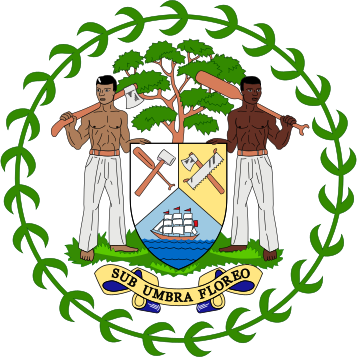
V31NO Belize flag Belize Doug Stark


Belize

[+] Mailing label
Lookups:   7177
QSL: W3NO


20121211 1321UTC 7014.9kHz V31NO
Date : 11/Dec/2012 1321UTC 
Freq : 7014.9kHz CW
Rig : ICOM IC-7200
ANT : LOOP(for 20m..not enough gain)
PC recording


DXpedition to Placencia, Belize by W3NO and K3RV


Lookups7177 (9412)
QRZ AdminK3RV
Last Update2006-03-31 18:38:44
Geo SourceFrom DXCC
Bearing45.6° NE (from JJ5IZX)
Distance7958.1 mi (12807.4 km)
Long Path16898.7 mi (27195.8 km)
Sunrise12:14:08 UTC
Sunset23:22:12 UTC
QSL InfoW3NO
Apply for a new Vanity callsign...


Belize Listeni/bəˈlz/, formerly British Honduras, is a country located on the north eastern coast of Central America. It is the only country in the area where English is the official language, although Kriol and Spanish are more commonly spoken. Belize is bordered to the north by Mexico, to the south and west by Guatemala and to the east by the Caribbean Sea. Its mainland is about 290 kilometres (180 mi) long and 110 kilometres (68 mi) wide.
With 22,960 square kilometres (8,860 sq mi) of land and a population of only 312,698 inhabitants (2010 census),[1]Belize possesses the lowest population density in Central America.[4] The country's population growth rate of 3.15% (2012 est.)[5] is the second highest in the region and one of the highest in the western hemisphere. Belize's abundance of terrestrial and marine species, and its diversity of ecosystems give it a key place within the globally significant Mesoamerican Biological Corridor.[6]
Belize has a diverse society, comprising many cultures and languages. It is the only nation in the region with aBritish colonial heritage, but as a part of the Western Caribbean Zone, it also shares a common heritage with the Caribbean portions of other Central American countries. In general, Belize is considered to be a Central American nation with strong ties to both the Caribbean and Latin America. Belize is a member of the Caribbean Community(CARICOM), the Community of Latin American and Caribbean States (CELAC), and Sistema de la Integración Centroamericana (SICA).

EI4KF(Ireland) on 30m RTTY!!!

EI4KF(Ireland) on 30m RTTY!!!

QSL image for EI4KF
EI4KF Ireland flag Ireland Erik Carling
"Lyndhurst"
Tullynascreena, near Dromahair, Leitrim
Ireland

[+] Mailing label
Lookups:   12118
QSL: DIRECT


I am not a member of the radio society and do not have access to the buro. Please QSL direct only, covering my costs of replying to you and enclosing a return envelope. Current Irish postage rates mean a minimum of $2 or 1 IRC is required.
I am QRV 80m - 6m on SSB, CW and RTTY/PSK31. If you need EI on a particular band or mode, email for a sked.
Other calls: G0CGL, GI0CGL. I am QSL manager and still have cards for YJ8NJS, YJ8JS, YJ1BKS.
Licenced since 1985, as G0CGL I have worked and confirmed all DXCC entities (No 1 Honor Roll) with 300+ confirmed on every band except 80m (271) and 160m / 6m (just 100+ on those bands). In 2011 I relocated to EI and started activity as EI4KF in September. I am QRV most bands and all modes.
------------------------------------------------------------------------------------------------------------------------------------------------------------------------------------------------------
QSL card update: As at 3 December 2012, all cards received with sufficient return postage have been answered.


20121211 1139UTC 10141kHz EI4KF
Date : 11/Dec/2012 1139UTC 
Freq : 10141kHz RTTY (about at 1280Hz)
Rig : SDR(PI4THT)
ANT : GP
PC recording


Ireland (Listeni/ˈaɪərlənd/RP[ˈʌɪələnd]IrishÉire [ˈeːɾʲə] ( listen)Ulster-ScotsAirlann or Airlan) is an island to the north-west of continental Europe. It is the third-largest island in Europe and the twentieth-largest island on Earth.[5]To its east is the larger island of Great Britain, from which it is separated by the Irish Sea.
Politically, Ireland is divided between the Republic of Ireland, which covers just under five-sixths of the island, andNorthern Ireland, a part of the United Kingdom, which covers the remainder and is located in the north-east of the island. The population of Ireland is approximately 6.4 million. Just under 4.6 million live in the Republic of Ireland and just under 1.8 million live in Northern Ireland.[6]
Relatively low-lying mountains surrounding a central plain epitomise Ireland's geography with several navigable rivers extending inland. The island has lush vegetation, a product of its mild but changeable oceanic climate, which avoids extremes in temperature. Thick woodlands covered the island until the 17th century. Today, it is one of the most deforested areas in Europe.[7][8] There are twenty-six extant mammal species native to Ireland.
Norman invasion in the Middle Ages gave way to a Gaelic resurgence in the 13th century. Over sixty years ofintermittent warfare in the 1500s led to English dominance after 1603. In the 1690s, a system of Protestant English rule was designed to materially disadvantage the Catholic majority and Protestant dissenters, and was extended during the 18th century. In 1801, Ireland became a part of the United Kingdom. A war of independence in the early 20th century led to the partition of the island, creating the Irish Free State, which became increasingly sovereign over the following decades. Northern Ireland remained a part of the United Kingdom and saw much civil unrest from the late 1960s until the 1990s. This subsided following a political agreement in 1998. In 1973, both parts of Ireland joined the European Economic Community.
Irish culture has had a significant influence on other cultures, particularly in the fields of literature and, to a lesser degree, science and education. A strong indigenous culture exists, as expressed for example through Gaelic games,Irish music and the Irish language, alongside mainstream Western culture, such as contemporary music and drama, and a culture with much in common with Great Britain, as expressed through sports such as soccerrugbyhorse racing, and golf, as well as the English language.


Geography


Physical features of Ireland.
The island of Ireland is located in the north-west of Europe, between latitudes 51° and 56° N, and longitudes 11° and 5° W. It is separated from the neighbouring island of Great Britain by the Irish Sea and the North Channel, which has a width of 23 kilometres (14 mi)[87] at its narrowest point. To the west is the northern Atlantic Ocean and to the south is the Celtic Sea, which lies between Ireland and Brittany, in France. Ireland and Great Britain, together with nearby islands, are known collectively as the British Isles. As the term British Isles is controversial in relation to Ireland, the alternate term Britain and Ireland is often used as a neutral term for the islands.
A ring of coastal mountains surround low plains at the centre of the island. The highest of these isCarrauntoohil (IrishCorrán Tuathail) in County Kerry, which rises to 1,038 m (3,406 ft) above sea level.[88] The most arable land lies in the province of Leinster.[89] Western areas can be mountainous and rocky with green panoramic vistas. The River Shannon, the island's longest river at 386 km (240 mi) long, rises in County Cavan in the north west and flows 113 kilometres (70 mi) to Limerick city in the mid west.[90]
The island's lush vegetation, a product of its mild climate and frequent rainfall, earns it thesobriquet the Emerald Isle. Overall, Ireland has a mild but changeable oceanic climate with few extremes. The climate is typically insular and is temperate avoiding the extremes in temperature of many other areas in the world at similar latitudes.[91] This is a result of the moderating moist winds which ordinarily prevail from the South-Western Atlantic.

The rugged hills of ConnemaraCounty Galway.
Precipitation falls throughout the year but is light overall, particularly in the east. The west tends to be wetter on average and prone to Atlantic storms, especially in the late autumn and winter months. These occasionally bring destructive winds and higher total rainfall to these areas, as well as sometimes snow and hail. The regions of north County Galway and east County Mayo have the highest incidents of recorded lightning annually for the island, with lightning occurring approximately five to ten days per year in these areas.[92] Munster, in the south, records the least snow whereas Ulster, in the north, records the most.
Inland areas are warmer in summer and colder in winter. Usually around 40 days of the year are below freezing 0 °C(32 °F) at inland weather stations, compared to 10 days at coastal stations. Ireland is sometimes affected by heat waves, most recently in 1995, 2003 and 2006. In common with the rest of Europe, Ireland experienced unusually cold weather during the winter of 2009/10. Temperatures fell as low as −17.2 °C (1 °F) in County Mayo on December 20[93] and up to a metre (3 ft) of snow in mountainous areas.

Green pasture in County Down, with theMourne Mountains in the background.
The island consists of varied geological provinces. In the far west, around County Galway and County Donegal, is a medium to high grade metamorphic and igneous complex of Caledonide affinity, similar to the Scottish Highlands. Across southeast Ulster and extending southwest to Longford and south to Navan is a province of Ordovician and Silurian rocks, with similarities to the Southern Uplands province of Scotland. Further south, along the County Wexfordcoastline, is an area of granite intrusives into more Ordovician and Silurian rocks, like that found in Wales.[94][95] In the southwest, around Bantry Bay and the mountains of Macgillicuddy's Reeks, is an area of substantially deformed, but only lightly metamorphosed, Devonian-aged rocks.[96] This partial ring of "hard rock" geology is covered by a blanket of Carboniferous limestone over the centre of the country, giving rise to a comparatively fertile and lush landscape. The west-coast district of the Burren around Lisdoonvarna has well-developed karst features.[97] Significant stratiform lead-zinc mineralisation is found in the limestones around Silvermines and Tynagh.
Hydrocarbon exploration is ongoing following the first major find at the Kinsale Head gas field off Cork in the mid-1970s.[98][99] More recently, in 1999, economically significant finds of natural gas were made in the Corrib Gas Fieldoff the County Mayo coast. This has increased activity off the west coast in parallel with the "West of Shetland" step-out development from the North Sea hydrocarbon province. The Helvick oil field, estimated to contain over 28 million barrels (4,500,000 m3) of oil, is another recent discovery.[100]