Good Morning OM!! Charles Chaplin's music!!!
 NHK Radio-1 at 990kHz
20121218 1726UTC 990kHz NHK-R1 Kochi
Date : 18/Dec/2012 1726UTC
Freq : 990kHz AM
Rig : ICOM IC-7200
ANT : LOOP(for 20m not enough Gain)
PC recording
1 The Great Dictator's music
NHK Radio-1 at 990kHz
20121218 1726UTC 990kHz NHK-R1 Kochi
Date : 18/Dec/2012 1726UTC
Freq : 990kHz AM
Rig : ICOM IC-7200
ANT : LOOP(for 20m not enough Gain)
PC recording
1 The Great Dictator's music
The Great Dictator is a 1940 American
comedy-drama film starring, written, produced, composed, and directed by
Charlie Chaplin, following the tradition of many of his other films. Having been the only
Hollywood filmmaker to continue to make
silent films well into the period of sound films, this was Chaplin's first true
talking picture as well as his most commercially successful film.
[3]
At the time of its first release, the United States was still formally at peace with
Nazi Germany. Chaplin's film advanced a stirring, controversial condemnation of
Adolf Hitler,
Benito Mussolini's
fascism,
antisemitism, and the Nazis, whom he excoriates in the film as "machine men, with machine minds and machine hearts".
2 Modern Times (film)'s music

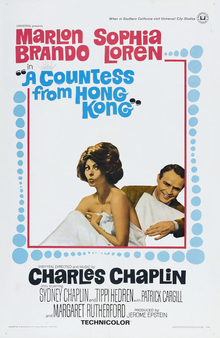
3 A Countess from Hong Kong
The story is based loosely on the life of a woman Chaplin met in France, named Moussia Sodskaya, or "Skaya"
[2]as he calls her in his 1922 book,
My Trip Abroad. She was a Russian singer and dancer that "was a stateless person marooned in France without a passport".
[3] The idea, according to a press release written by Chaplin after the movie received a negative reception, was that the story "resulted from a visit I made to Shanghai in 1931 where I came across a number of titled aristocrats who had escaped the Russian Revolution".
[4]
It was originally started as a film called
Stowaway[5] in the 1930s, planned for Paulette Goddard, but production was never completed. This resulting film, created nearly 30 years after its inception, was a critical failure and grossed US$2,000,000 from a US$3,500,000 budget. However, it did prove to be extremely successful in Italy. In addition, the success of the music score was able to cover the budget.
Critics such as Tim Hunter and
Andrew Sarris, as well as the poet
John Betjeman, viewed the film as being among Chaplin's best works. Chaplin, although unhappy with the critical and audience reaction, by the end of his life considered it his greatest film.
[citation needed]

 Switzerland